Faucet Only Leaks at Night? 6 Pressure Issues That Explain It
You finally crawl into bed after a long day, and then you hear it from the kitchen. Drip. Drip. Drip. The faucet was perfectly fine this morning, so why is it acting up now? If your faucet only leaks at night, you are not losing your mind, and no, your plumbing is not haunted.
The short answer comes down to water pressure fluctuations. During daylight hours, your neighbors are using water left and right, which keeps the pressure in the pipes moderate. But once everyone goes to sleep, demand drops and the pressure rises. That surge pushes water through worn out seals that held up just fine earlier in the day, leaving you wondering, “Why does my faucet only leak at night?”
This guide walks you through six specific faucet pressure issues that turn your sink into a nighttime nuisance. You will learn what causes the drip, which mechanical parts are failing, and how to fix it so you can finally get some rest.
Why Does My Faucet Only Leak at Night? The Quick Answer
Here is the direct answer you came for. A faucet leaking at night almost always traces back to one thing: rising water pressure when your neighborhood goes to sleep. During the day, everyone is using water, so the pressure in the municipal lines stays lower. But at night, demand drops dramatically, and the pressure surges. If your faucet has a worn washer, a tired O ring, or a failing cartridge, that extra pressure pushes water past those weak spots.
But here is an honest second possibility. Your faucet might actually drip around the clock. You just do not notice it during the day because the TV is on, the kids are running around, and the dishwasher is humming. Is it normal for faucets to drip at night in a quiet house? It can feel that way, but the drip was probably there all along. The silence just amplifies it.
The good news is this is a very common and very fixable problem. Leaking faucet causes usually come down to a few specific parts, and most of them cost under ten dollars at the hardware store. Let us walk through the six pressure issues that explain why your faucet saves its performance for after dark.
6 Pressure Issues That Explain a Nighttime Faucet Leak
Now that you know why pressure swings matter, let us get specific. These six issues are the real reasons your faucet only acts up after dark. Each one involves pressure finding a weak spot.
1. Surging Municipal Line Pressure
Your city’s water system is not constant. It changes hour by hour. During the day, high demand keeps pressure moderate. At night, when everyone stops using water, the pressure can spike significantly. That surge pushes water through seals that held fine during the day. If you have high water pressure in pipes above 80 PSI, even a brand new faucet can start dripping.
The fix is a pressure reducing valve (PRV) installed on your main water line. It keeps your home at a safe 40 to 60 PSI regardless of what the city does.
2. Plumbing Pressure Imbalance in the Home
Sometimes the problem is not the city, it is your own pipes. Plumbing pressure imbalance happens when different parts of your home receive different water pressures. A partially closed valve, a pipe that is too narrow, or a poorly designed layout can create uneven pressure. The weakest fixture, usually an older faucet, gets hit hardest when the system balances itself at night.
A plumber can test pressure at different fixtures and identify where the imbalance lives. Sometimes it is a simple valve adjustment. Other times, you need a pressure regulator just for that zone of the house.
3. Pipe Expansion and Contraction at Night
Metal and rubber react to temperature. When your house cools down overnight, pipes contract slightly. So do the rubber seals inside your faucet. Pipe expansion at night is actually contraction, and it can open tiny gaps that were watertight when everything was warm. A gap the width of a human hair is enough for a drip under high pressure.
This is why you might notice the leak starts an hour after you go to bed, not immediately. The house has to cool down first. Replacing old, rigid rubber parts with fresh flexible seals helps accommodate this natural movement.
4. The Vacuum Effect and Trapped Air
Plumbing systems are not always full of water. Air gets trapped in lines, especially after repairs or when a water heater cycles. Faucet dripping when water is off can happen when a vacuum effect slowly pulls trapped water through the weakest point in the system. This is more common at night because no one is using water to disturb the air pockets.
Running all your faucets for a minute or two can purge trapped air. If the drip stops, you found your problem. If it comes back, look elsewhere.
5. Pressure Pushing Past a Worn Faucet Cartridge
Cartridge style faucets do not use traditional rubber washers. They use a sealed cartridge that rotates to control water flow. Over time, the internal seals inside that cartridge wear down. A worn faucet cartridge might seal fine at 50 PSI but start leaking at 70 PSI. Nighttime pressure spikes push it over that threshold.
Replacing the cartridge is usually a ten minute job. Turn off the water, remove the handle, pull out the old cartridge, and snap in a new one. Bring the old one to the hardware store to match the brand and size.
6. Pressure Forcing Leaks Through the Handle and Stem
If water is dripping from under your handle rather than the spout, you have a different problem. Faucet handle leaking from stem means pressure is pushing water up and out around the stem rather than through the main valve. This happens when the O rings or packing nut that seal the stem have dried out or cracked.
Tightening the packing nut gently can sometimes stop the leak. If that does not work, you need to replace the stem O rings or the entire stem assembly. This is a common issue in older two handle faucets.
Simple Fixes You Can Try Tonight
You do not need to call a plumber for every drip. Some fixes are easy, cheap, and take less than an hour. Here is what you can try before hiring a plumbing company.
Replace the Washer or O Ring
This is the most common fix for a faucet dripping at night. Turn off the water under the sink, remove the handle, and look for a small rubber washer or O ring at the base of the stem. If it looks flattened, cracked, or feels hard instead of squishy, replace it. Hardware stores sell multi packs for a few dollars.
Clean Mineral Buildup Off the Valve Seat
Hard water leaves white or greenish crust on metal parts and that buildup prevents a tight seal. Disassemble the faucet and scrub the valve seat with white vinegar and an old toothbrush. Let it soak for ten minutes if the buildup is thick. Rinse and reassemble. You might be surprised how often this stops the drip.
Check Your Water Pressure
Buy a simple pressure gauge that screws onto an outdoor spigot or washing machine hookup. Test your pressure during the day and again at night. If the nighttime reading is above 80 PSI, you have found the culprit. A pressure reducing valve costs around $50 and takes a plumber about an hour to install.
Tighten the Packing Nut
If your faucet dripping at night is coming from the handle instead of the spout, look for a hex nut right under the handle. Give it a gentle quarter turn with a wrench. Do not overtighten. Just snug it up. This compresses the packing material and often stops stem leaks immediately.
Replace the Cartridge
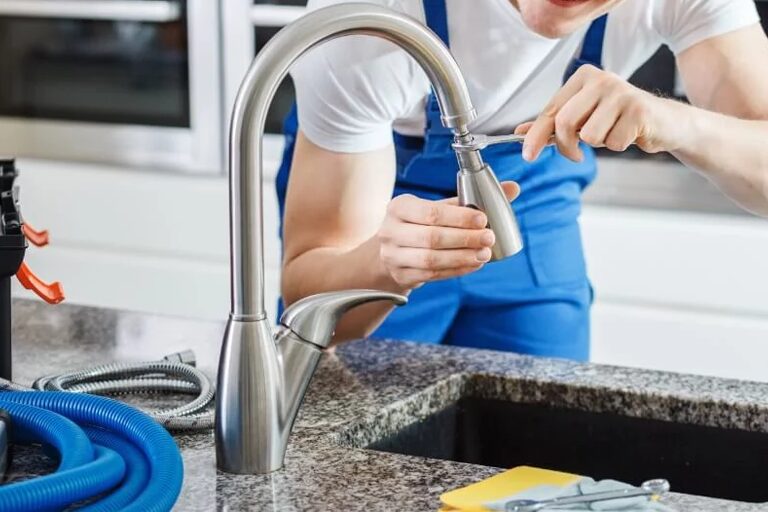
For cartridge style faucets, the fix is a replacement cartridge. Remove the handle, pull the old cartridge out with pliers, and slide a new one in. Match the brand and model at the hardware store. This is a ten minute fix for most single handle kitchen faucets.
When None of That Works
If you have tried all these fixes and the drip remains, you are dealing with a deeper issue like a corroded valve seat that cannot be cleaned, a cracked faucet body, or a pressure problem that requires professional equipment to diagnose. That is when faucet services from a qualified plumber make sense.
Let a Pro Handle the Stubborn Leaks
Not every drip is a DIY project. At Santino’s A+ Handyman Service, we provide professional faucet services for leaks, remodels, and water-efficient upgrades.
FAQs
At night, water demand drops and pressure in the plumbing system rises, pushing water through weak seals in the faucet.
Not always, but it often indicates worn washers, cartridges, or high water pressure that should be fixed to avoid bigger damage.
Yes. When pressure exceeds safe levels, it forces water through damaged or weak internal faucet components.
Check water pressure, replace worn washers or cartridges, and clean mineral buildup inside the faucet.
Yes, if DIY fixes don’t work or if water pressure in your home is consistently high.